Happy Present Meet
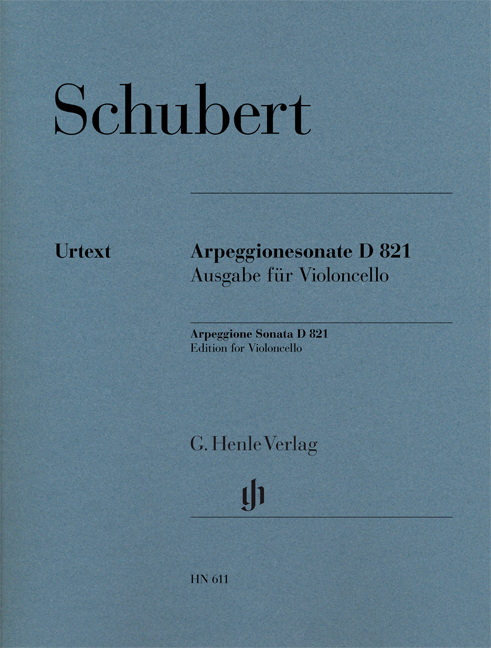
Schubert Arpeggione Sonata in a minor D 821 for Cello and Piano
슈베르트 아르페지오네 소나타 a단조 D 821 첼로와 피아노
악기 구성
Cello and Piano 첼로와 피아노
Wolf-Dieter Seiffert (Editor) 볼프디터 자이페르트
Klaus Schilde (Fingering Piano) 클라우스 쉴데
Reiner Ginzel (Fingering and bowing for Violoncello) 라이너 긴첼
Version for Violoncello, Urtext Edition, paperbound
with marked and unmarked string parts
Pages 64 (V+35+11+13)
Content
Arpeggione Sonata, Version for Violoncello a minor D 821 (op. post.) 아르페지오네 소나타, 첼로 판 a단조
9 difficult
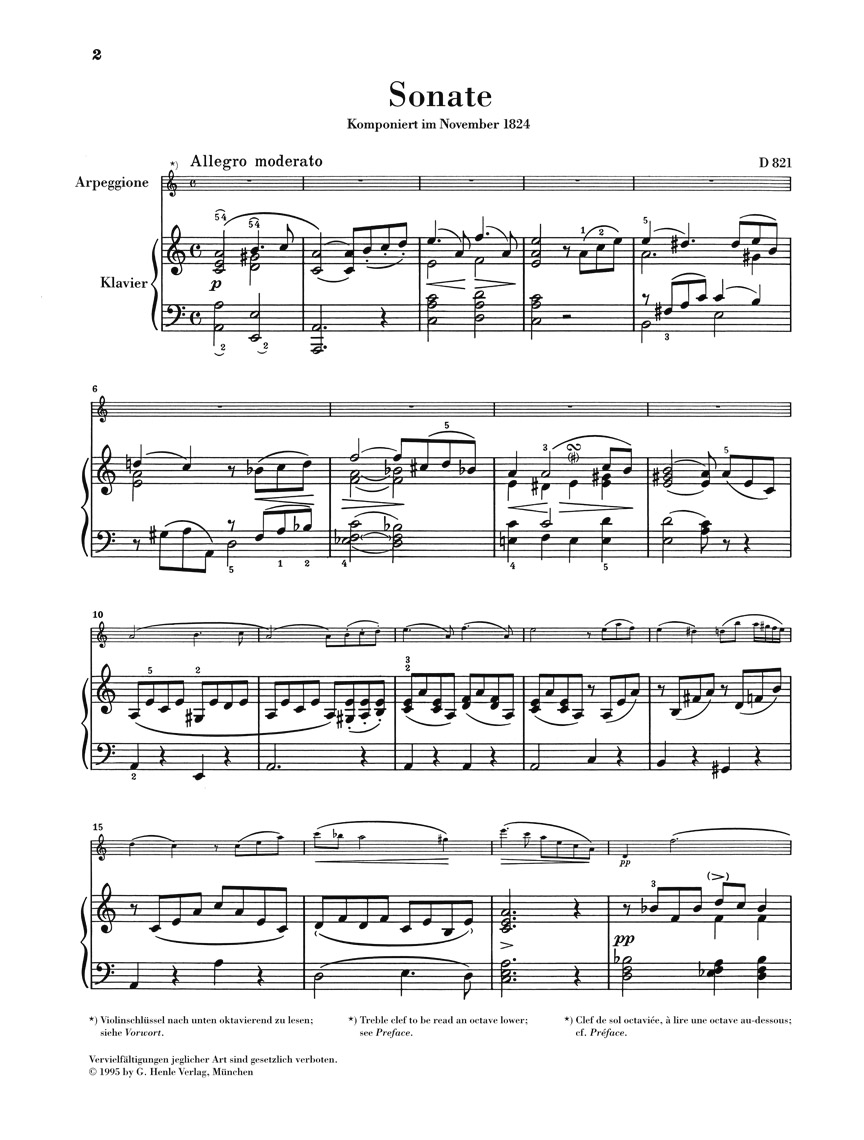
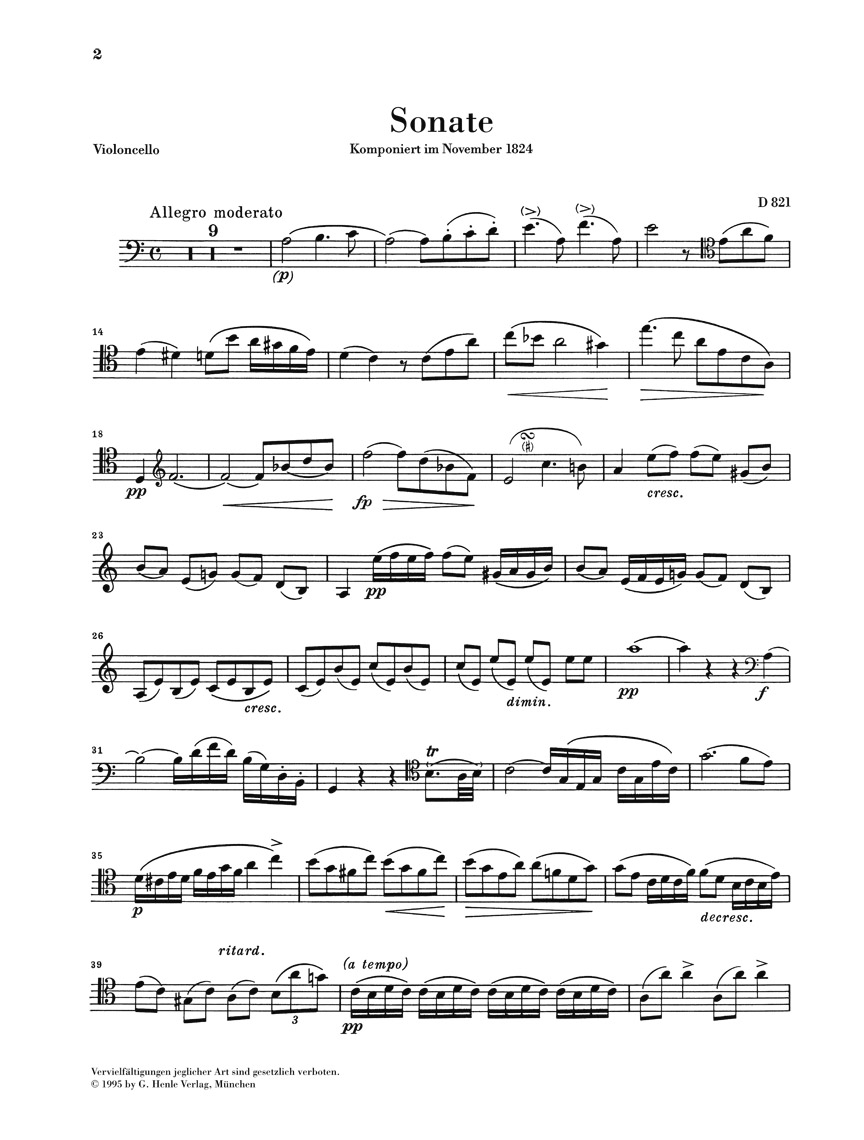
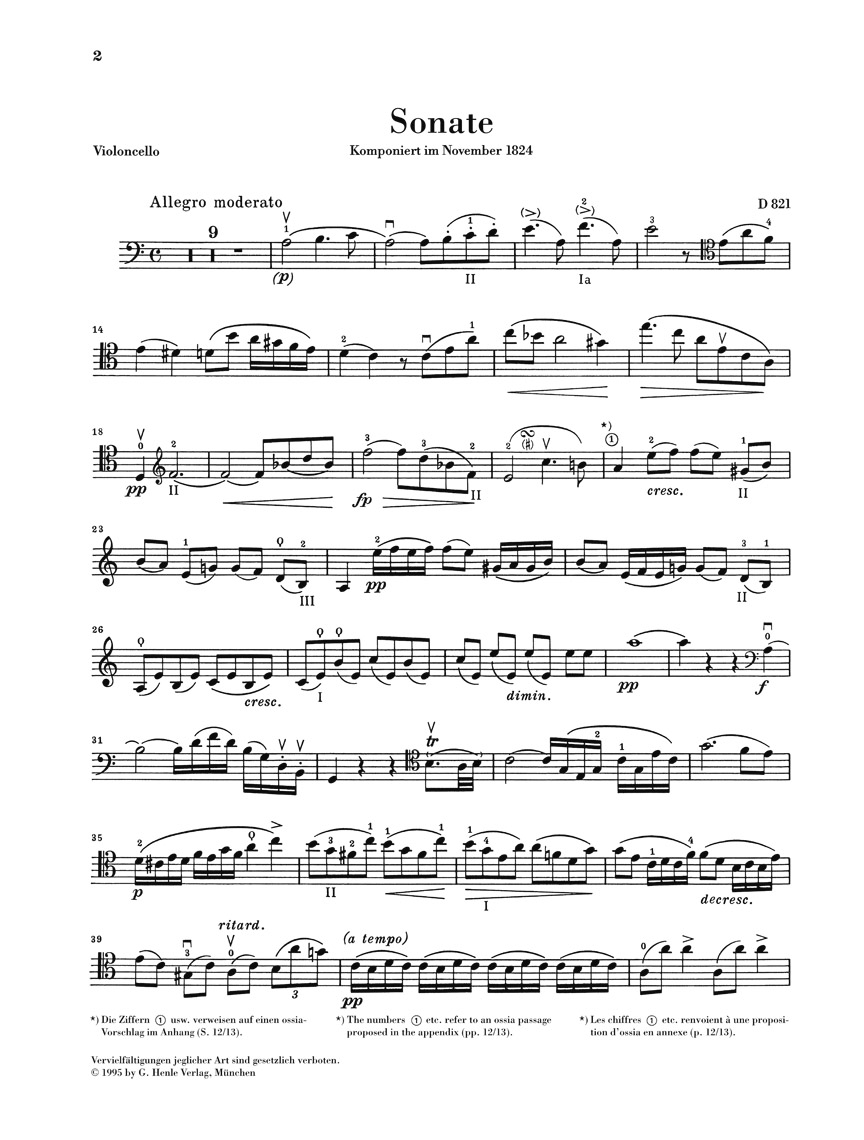
Good intentions are simply not good enough (to freely paraphrase Kurt Tucholsky): the arpeggione, a kind of hybrid instrument like a large bowed guitar, never won acceptance among musicians. This curiosity of instrumental engineering would certainly have long since been consigned to oblivion had not Franz Schubert of all people composed his A minor sonata for it. This three-movement work is now truly immortal, but at the same time presents a problem as an Urtext because the original arpeggione part cannot be performed on those instruments that most closely approximate its sound – clearly the viola or violoncello – without some interventions in the text. G. Henle Verlag solves the dilemma on the one hand by setting the arpeggione Urtext part above the original piano part (score), and on the other by clearly denoting the few necessary octave shifts in the included instrumental parts. Out of the question for the publisher was a transcription for another instrument such as the violin (as was included in Diabelli’s posthumous first edition), flute, or other high melodic instrument, because these are simply too far removed from the sound Schubert had in mind. At best, a contrabass part might still work. Or …?
좋은 의도만으로는 충분하지 않습니다(쿠르트 투홀스키의 말을 자유롭게 바꾸어 말하자면). 커다란 활로 켜는 기타 같은 일종의 혼종 악기인 아르페지오네는 음악가들 사이에서 끝내 받아들여지지 못했습니다. 다른 사람도 아닌 프란츠 슈베르트가 이 악기를 위해 a단조 소나타를 작곡하지 않았다면, 이 기묘한 악기 공학의 산물은 틀림없이 오래전에 잊혔을 것입니다. 세 악장으로 된 이 작품은 이제 진정 불멸의 명곡이 되었지만, 원전판으로서는 문제를 안고 있습니다. 원래의 아르페지오네 파트는 그 소리에 가장 가까운 악기들, 즉 분명히 비올라나 첼로로는 악보에 어느 정도 손을 대지 않고는 연주할 수 없기 때문입니다. 헨레는 이 딜레마를 한편으로는 아르페지오네 원전 파트를 원래의 피아노 파트 위에 배치하고(총보), 다른 한편으로는 함께 수록된 악기 파트보에 꼭 필요한 몇 군데의 옥타브 이동을 명확히 표시하는 방식으로 해결했습니다. 바이올린(디아벨리가 펴낸 사후 초판에 수록된 것처럼), 플루트 또는 그 밖의 고음 선율 악기 같은 다른 악기를 위한 편곡은 슈베르트가 염두에 둔 소리와 너무 동떨어져 있기 때문에 출판사로서는 고려 대상이 아니었습니다. 기껏해야 콘트라베이스 파트 정도는 가능할지도 모릅니다. 아니면 …?
작곡가 Schubert, Franz (1797-1828)
에디터 Seiffert, Wolf-Dieter