
Happy Present Meet
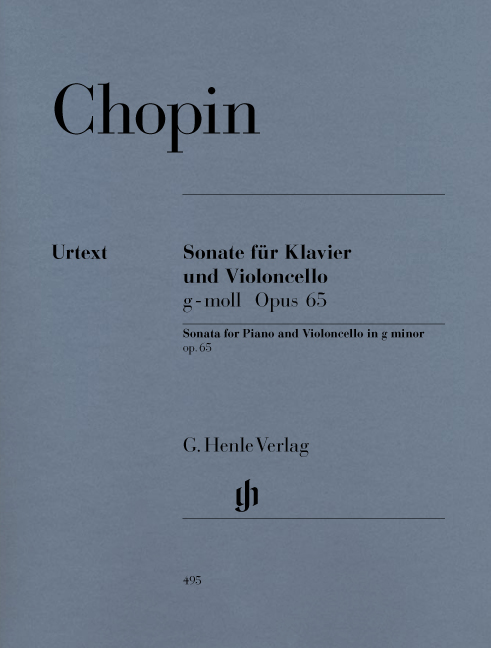
Chopin Sonata in g minor Op.65 for Cello and Piano
쇼팽 첼로 소나타 g단조 Op.65 첼로와 피아노
Ewald Zimmermann (Editor) 에발트 치머만
Klaus Schilde (Fingering Piano) 클라우스 쉴데
Claus Kanngiesser (Fingering and bowing for Violoncello) 클라우스 칸기서
Urtext Edition, paperbound
Violoncello and Piano
with marked and unmarked string parts
Pages 78 (IV+50+12+12)
Content
Violoncello Sonata g minor Op.65 첼로 소나타 g단조
7 difficult
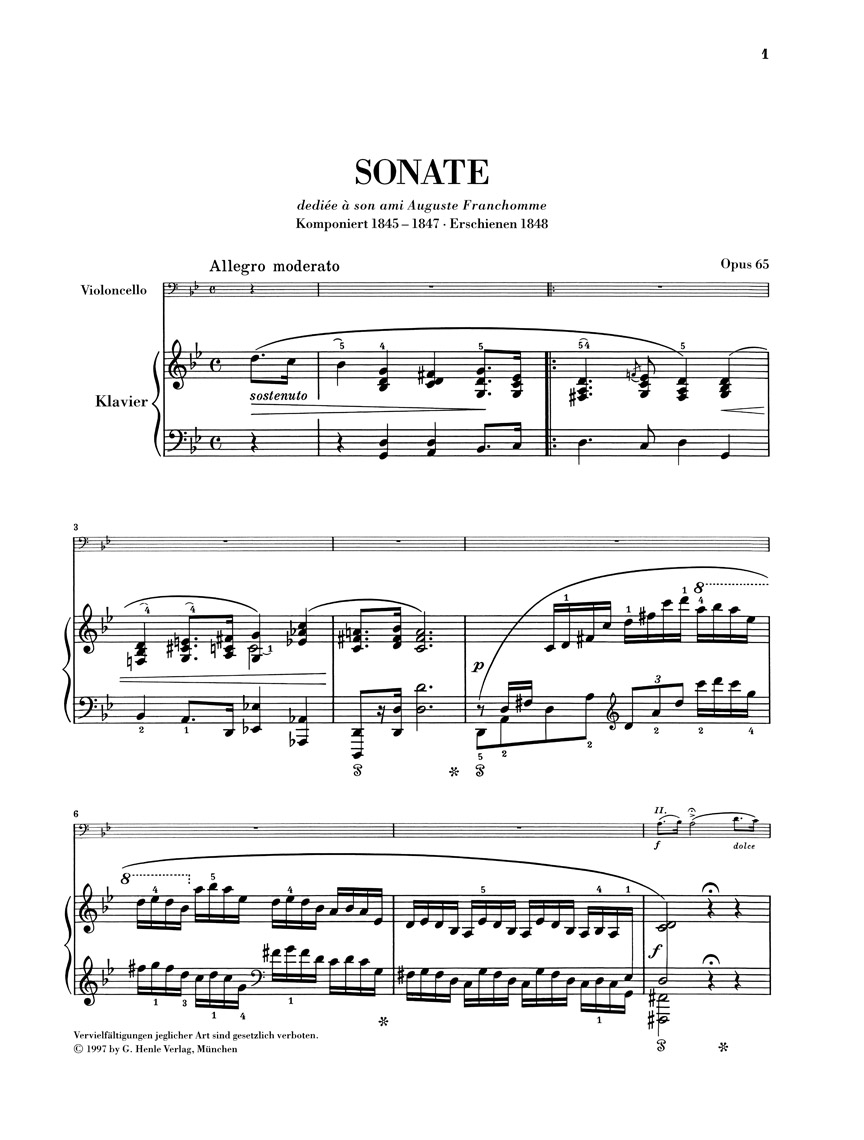
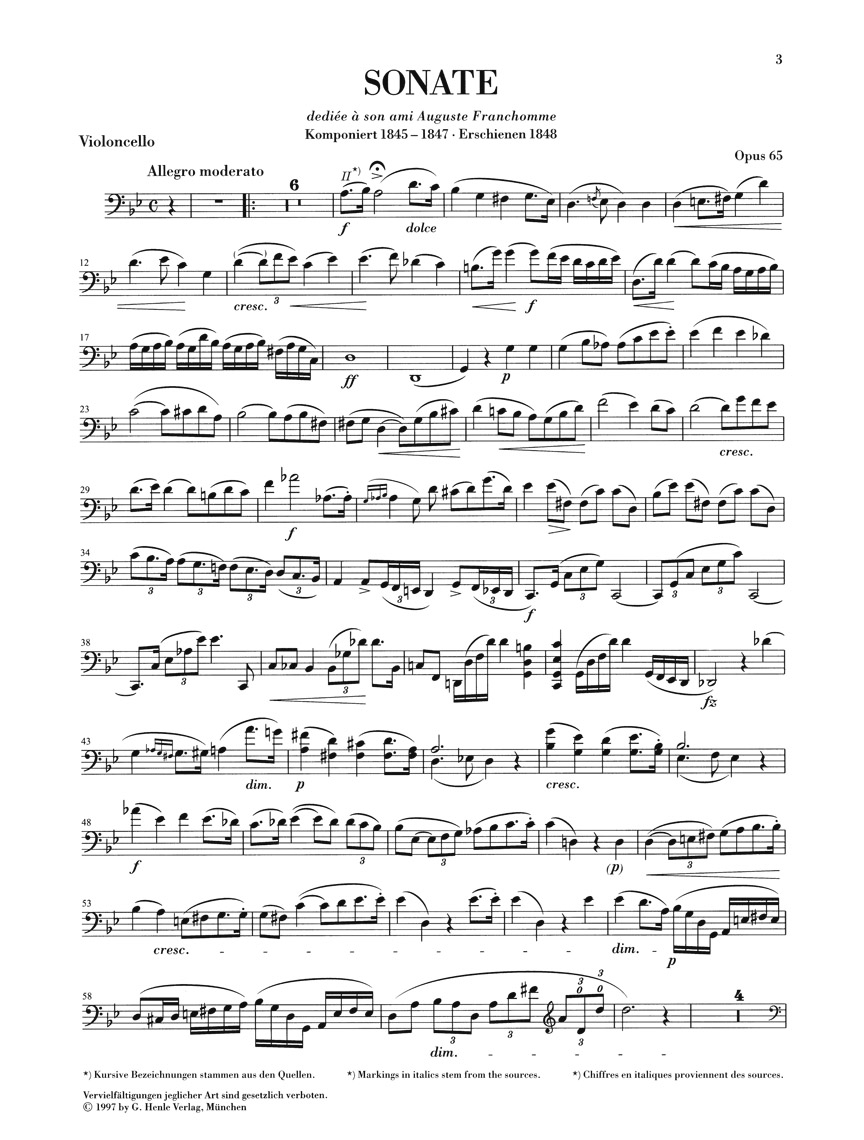
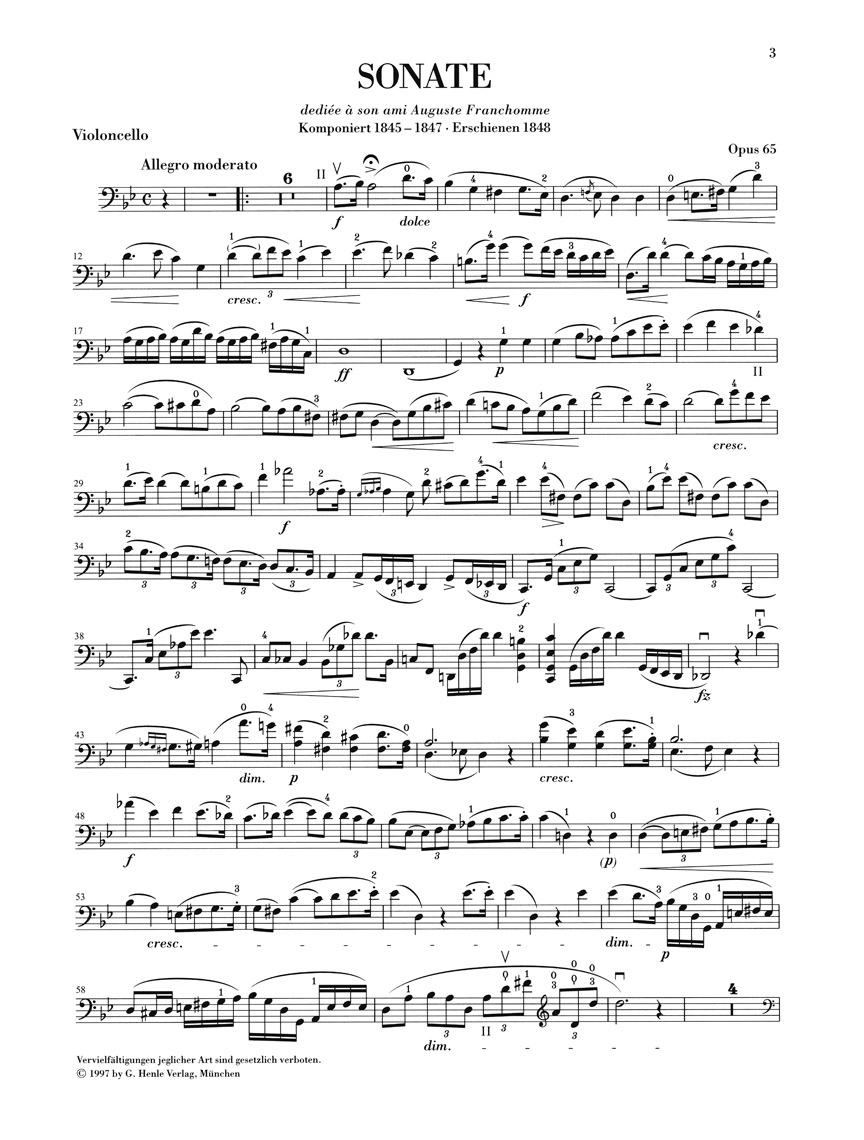
It is well known that Chopin almost exclusively wrote works for solo piano. Only for the cello did he make some exceptions: two works – a Polonaise brillante and the Duo Concertant (HN 788) were written for cello and piano, and he also let the cello express itself in his Piano Trio op. 8 (HN 1068). Finally, towards the end of his life, he honored the low-stringed instrument with a grand, four-movement Sonata in g minor. Proof that it was anything but child’s play is provided by the extensive sketch material. Chopin himself claimed: “With my cello sonata I am now satisfied and now dissatisfied. I toss it into the corner, then pick it up again.” Today we only have an inkling about this struggle. The sonata, with its famous melodic Largo movement, is now firmly embedded in the canon of cello literature.
쇼팽이 거의 피아노 독주곡만 썼다는 사실은 잘 알려져 있습니다. 예외는 첼로뿐이었습니다. 「화려한 폴로네즈」와 「협주풍 이중주」(HN 788), 이 두 작품을 첼로와 피아노를 위해 썼고, 피아노 트리오 Op.8(HN 1068)에서도 첼로가 제 목소리를 내게 했습니다. 마침내 생애 말년에는 이 저음 현악기에 네 악장으로 된 장대한 g단조 소나타를 바쳤습니다. 이 작업이 결코 쉬운 일이 아니었다는 것은 방대한 스케치 자료가 증명합니다. 쇼팽 자신도 「내 첼로 소나타는 만족스럽다가도 불만스럽다. 구석에 던져 두었다가 다시 집어 든다」고 말했습니다. 오늘날 우리는 이 고투를 어렴풋이 짐작할 뿐입니다. 선율이 아름다운 라르고 악장으로 유명한 이 소나타는 이제 첼로 레퍼토리의 정전으로 확고히 자리 잡았습니다.
작곡가 Chopin, Frederick (1810-1849)
에디터 Zimmermann, Ewald
Locatelli Sonata in D major for Cello and Piano (Piatti)
Tchaikovsky Variations on a Rococo Theme Op.33 for Cello and Piano
Piatti 12 Caprices Op.25 for Cello Solo (Fournier)
Piatti 12 Caprices Op.25 for Cello Solo
Brahms Cello Sonata No.1 in e minor Op.38 for Cello and Piano
Haydn Cello Concerto in D Major, Hob.VII:2 for Cello and Piano