
Happy Present Meet
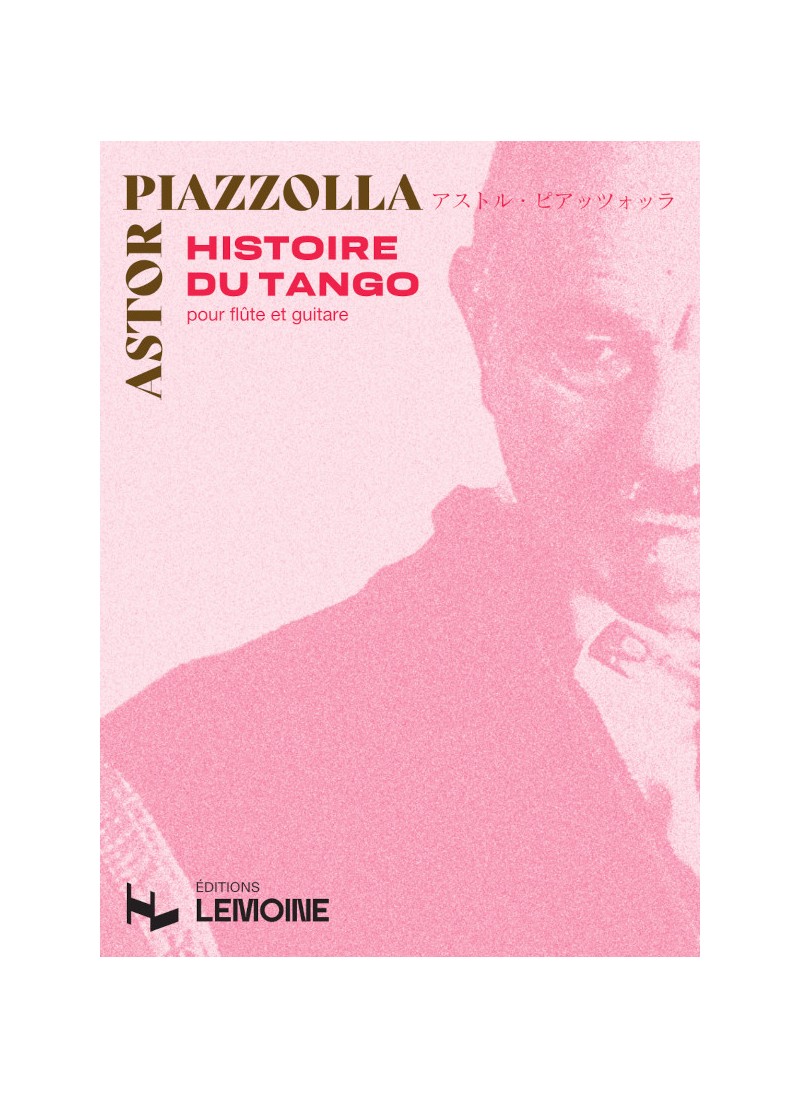
Piazzolla Histoire Du Tango for Flute and Guitar
피아졸라 탱고의 역사
Original version
Level : 4
Contents
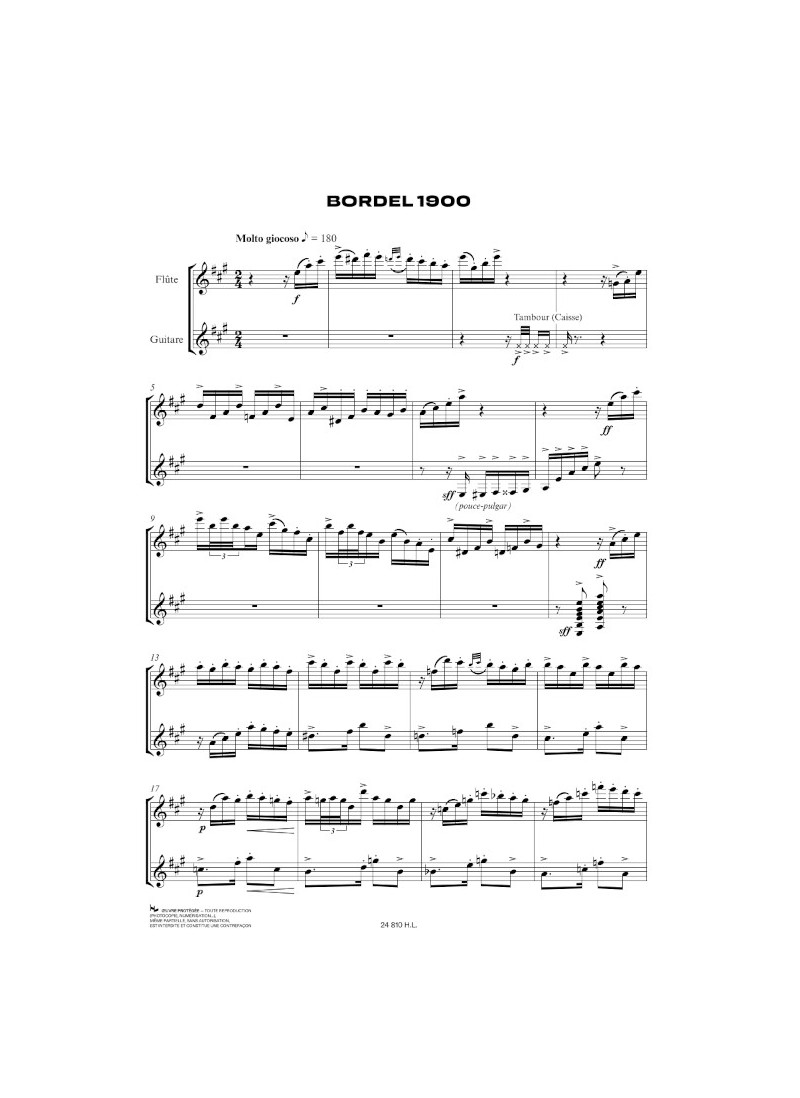
Bordel 1900
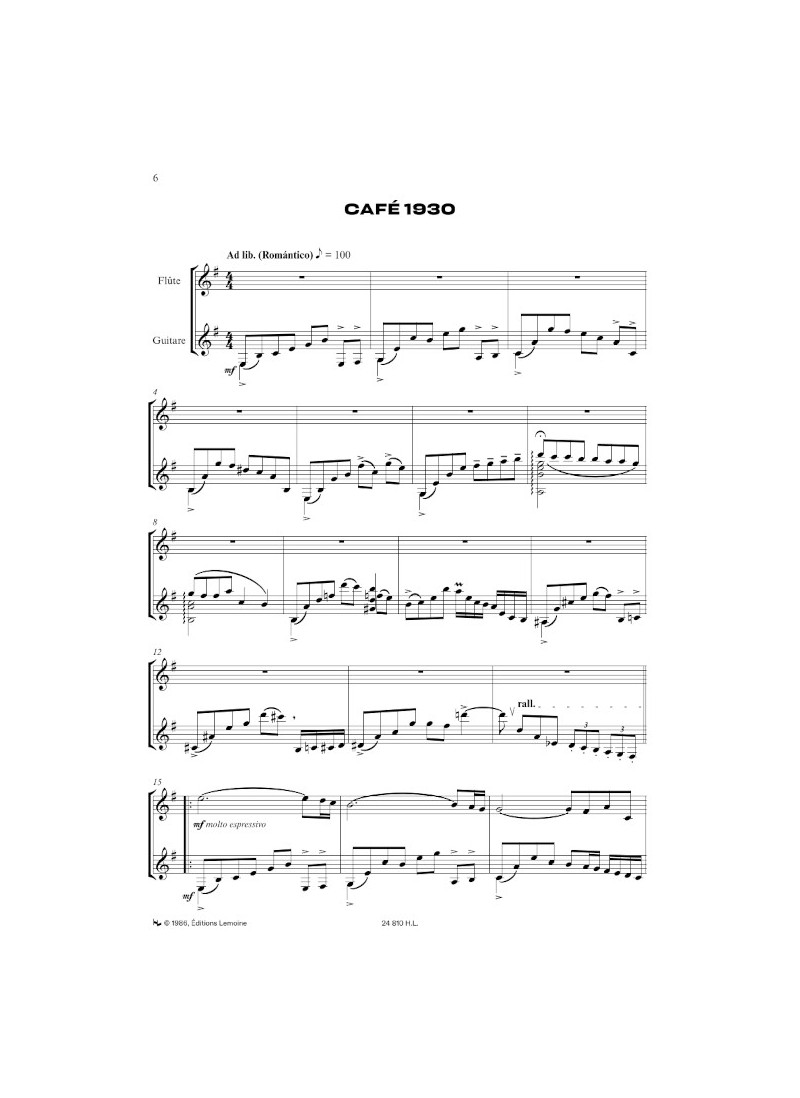
Cafe 1930
Nightclub 1960
Concert d`aujourd`hui
Item code 24810
ISBN/ISMN 9790230948104
Instruments Flute and guitar
Publisher Lemoine
Level 3. Intermediate
Collection Roberto Aussel
Bordel 1900:
The tango was born in Buenos-Aires in 1882. It was first played on the guitar and the flute. The piano was added later, followed by the bandoneon. It is music full of charm and vivacity, that gives the impression of the good spirits and volubility of the French, Italian and Spanish women who lived in these brothels, enticing the policemen, thieves, sailors and hoodlums who visited them. The tango is cheerful.
Café 1930:
This is a different era of the tango. People no longer danced to it, as in the 1900s and became satisfied by just listening, which allowed for a more musical and romantic evolution. This was a radical transformation. The tango became slower, more melancholic, and incorporated new harmonies. Tango orchestras were made up of two violins, two bandoneons, a piano and a double bass. Sometimes it was sung.
Night-club 1960:
A new evolution was witnessed during this period, in which international exchange increased considerably. Brazil and Argentina met in Buenos-Aires - bossa nova and the new tango were "same battle". The public flocked to the nightclubs to listen earnestly to the new tango - a revolution and profound disruption of certain forms of old tango.
Concert d'aujourd'hui:
Certain concepts join tango music with contemporary music, such as recollections by Bartok, Stravinsky and several others on a tango base. This is today's tango, the tango of the future...
1900년대 사창가:
탱고는 1882년 부에노스아이레스에서 탄생했습니다. 처음에는 기타와 플루트로 연주되었고, 나중에 피아노가 추가되었으며, 그 뒤를 이어 반도네온도 등장했습니다. 탱고는 매력과 활력이 넘치는 음악으로, 당시 사창가에 살면서 경찰, 도둑, 선원, 불량배들을 유혹했던 프랑스, 이탈리아, 스페인 여성들의 쾌활하고 수다스러운 모습을 떠올리게 합니다. 탱고는 유쾌한 음악입니다.
1930년대 카페:
탱고는 또 다른 시대를 맞이했습니다. 사람들은 1900년대처럼 탱고에 맞춰 춤을 추지 않고, 그저 듣는 것에 만족하게 되면서 더욱 음악적이고 낭만적인 방향으로 발전했습니다. 이는 급진적인 변화였습니다. 탱고는 느려지고, 더욱 애절해졌으며, 새로운 화음을 도입했습니다. 탱고 오케스트라는 바이올린 두 대, 반도네온 두 대, 피아노 한 대, 더블베이스 한 대로 구성되었으며, 때로는 노래가 곁들여지기도 했습니다.
1960년대 나이트클럽:
이 시기에는 국제 교류가 크게 증가하면서 새로운 진화가 일어났습니다. 브라질과 아르헨티나가 부에노스아이레스에서 만나 보사노바와 새로운 탱고를 선보였고, 두 장르는 마치 한 몸처럼 경쟁했습니다. 사람들은 나이트클럽으로 몰려들어 새로운 탱고를 열렬히 감상했는데, 이는 기존 탱고의 특정 형식에 혁명적이고 심오한 변화를 가져왔습니다.
오늘날의 콘서트:
바르톡, 스트라빈스키 등의 작품을 탱고를 기반으로 재해석하는 등, 탱고 음악과 현대 음악을 결합하는 여러 개념들이 등장했습니다. 이것이 오늘날의 탱고이자 미래의 탱고입니다.
작곡가 Piazzolla, A
A Satie Flute Album for Flute and Piano
Piazzolla Histoire Du Tango Flute (or Violin) and Piano
[통신판매]입금결제(단체주문,퀵착불,인터넷,매장방문입금)
Rutter Suite Antique for Flute and Piano
[특가상품] Debussy Prelude to 'Afternoon of a Faun' for Flute and Piano
Bartok Rumanian (Romanian) Folk Dance for Flute and Guitar
Giuliani Serenade Op.127 for Flute (Violin) and Guitar